Why you'll love it
- A quieter, greener Oslo: the Palace Park, villa streets and Frogner Park
- Urban planning you can see: how the city grew west after 1849, 1858 and 1878
- Homansbyen, Oslo's first planned villa town, rebuilt in a rush after the great fire of 1858
- Sommerro: a 1917–1931 power company headquarters that became one of Oslo's finest hotels
- Vigeland's 850-metre axis, walked end to end, with the planner's eye on how it was laid out
- Ideal if you are staying in Frogner or near the Palace: we start where you are
The route, minute by minute
Slottsplassen → Palace Park → Homansbyen → Sommerro → Bygdøy allé & Frogner Church → Gimlehøyden → Frogner Park & the Vigeland axis · about 4 km, gentle slopes
When: Sat–Sun 09:30 & 14:00 · Mon–Fri evenings 17:30. Times below are for the first start of the day; later starts follow the same route. Evening walks follow the same route and end on the Vigeland axis at dusk.
-
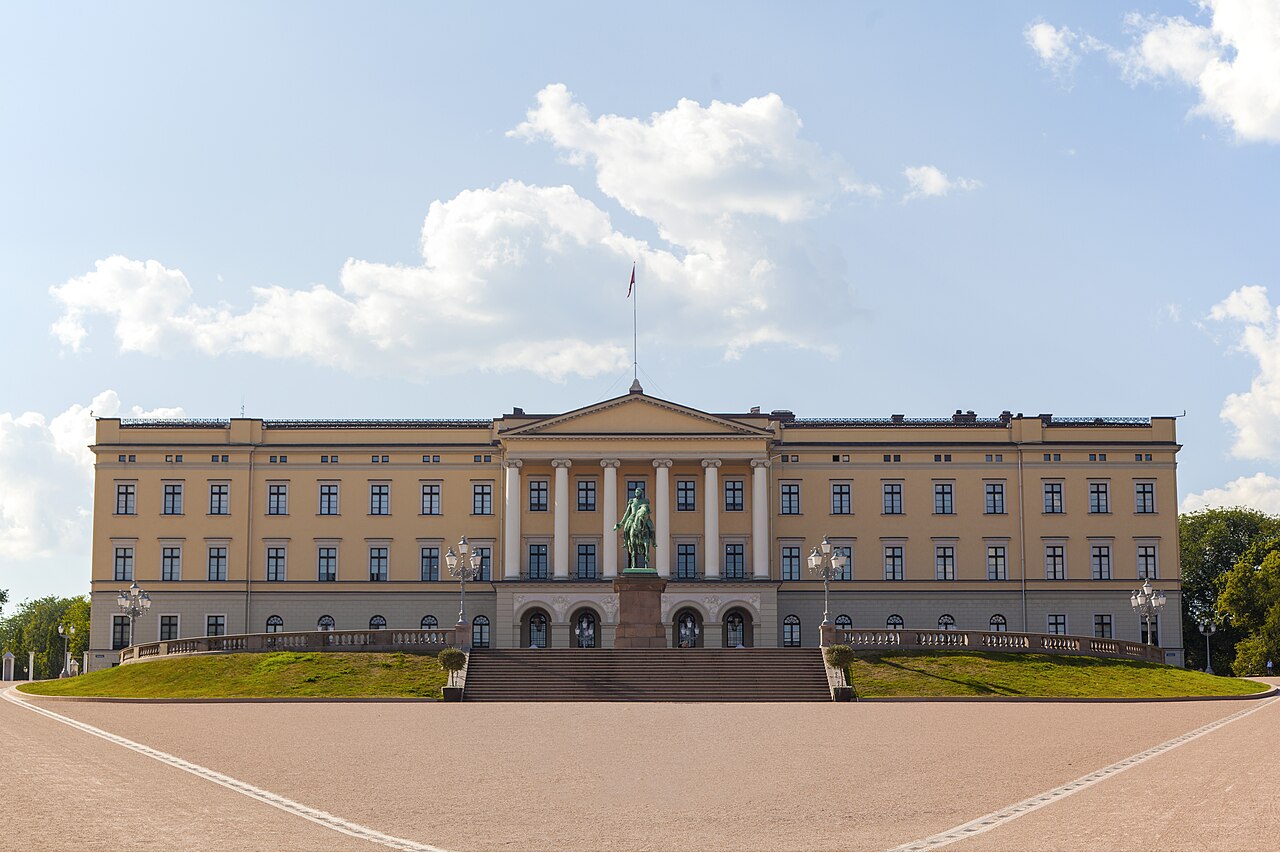
Slottsplassen, the Royal Palace
Meeting pointHans Linstow's palace was begun in 1825 and finished in 1849, on a hill outside the old town, looking straight down what became Karl Johans gate. A new capital needed a new axis: we read it from the top.
-
The Palace Park
300 m · 5 minTwenty-two hectares in the romantic landscape style of the 1840s, planned by Linstow and shaped by the first palace gardener, Martin Mortensen. It only reached its final form in the 1850s, after the last plots were bought in 1845.
-
Homansbyen
500 m · 8 minIn the 1850s the lawyers Jacob and Henrik Homan bought farmland behind the palace and divided it into plots. Sales were slow until the great fire of 1858 left wealthy families homeless. Architect Georg Andreas Bull designed the villas, and a garden suburb for civil servants appeared almost overnight.
-
Sommerro, the old power company
700 m · 10 minBjercke and Eliassen won the competition in 1917; the money ran out in 1920; the Oslo Lysverker headquarters finally opened in 1931. Neoclassical bones, functionalist plan, art deco details, murals by Per Krohg. Since 2022, a hotel. A short look at the lobby, or coffee.
Included: Coffee
-
Bygdøy allé and Frogner Church
600 m · 9 minFrogner joined the city in 1878. The 1890s brought ornate apartment blocks for the new middle class, lined along a tree-planted avenue. Ivar Næss's Frogner Church (1907) is Jugendstil in stone.
-
Gimlehøyden
400 m · 6 minBuilt between 1916 and 1925 to plans by Harald Hals, Harald Aars and Lorentz Harboe Ree: a planned housing ensemble around shared space, and a lesson in how Oslo tried to house its growing middle class well.
-
Frogner Park and the Vigeland axis
800 m · 12 min, then the 850 m axisFrogner Manor was here before the city. Gustav Vigeland designed not only more than 200 sculptures but the layout itself: an 850-metre axis from the Main Gate over the Bridge and the Fountain to the Monolith, 17 metres of granite and 121 figures. We walk it end to end and finish on the Monolith plateau.
Your guide · Urban planner and founder of Maison Oslo · English · Français
Every walk is prepared with the makers, curators and sources behind each stop. Ask anything, in English or French.
Good to know
Is it suitable for children?
Yes. It is the most family-friendly of our walks: parks, space to run, and Vigeland's sculptures are a hit with children.
Can we go inside the Royal Palace?
The palace opens for guided tours in summer only, booked through the Royal Court. We can plan your walk around a palace tour.
Is it hilly?
Gently: the palace sits on a hill and Frogner Park rises to the Monolith. About 4 km in total, at an easy pace.
In French?
Yes. Every walk runs in English or French.
Read before you go
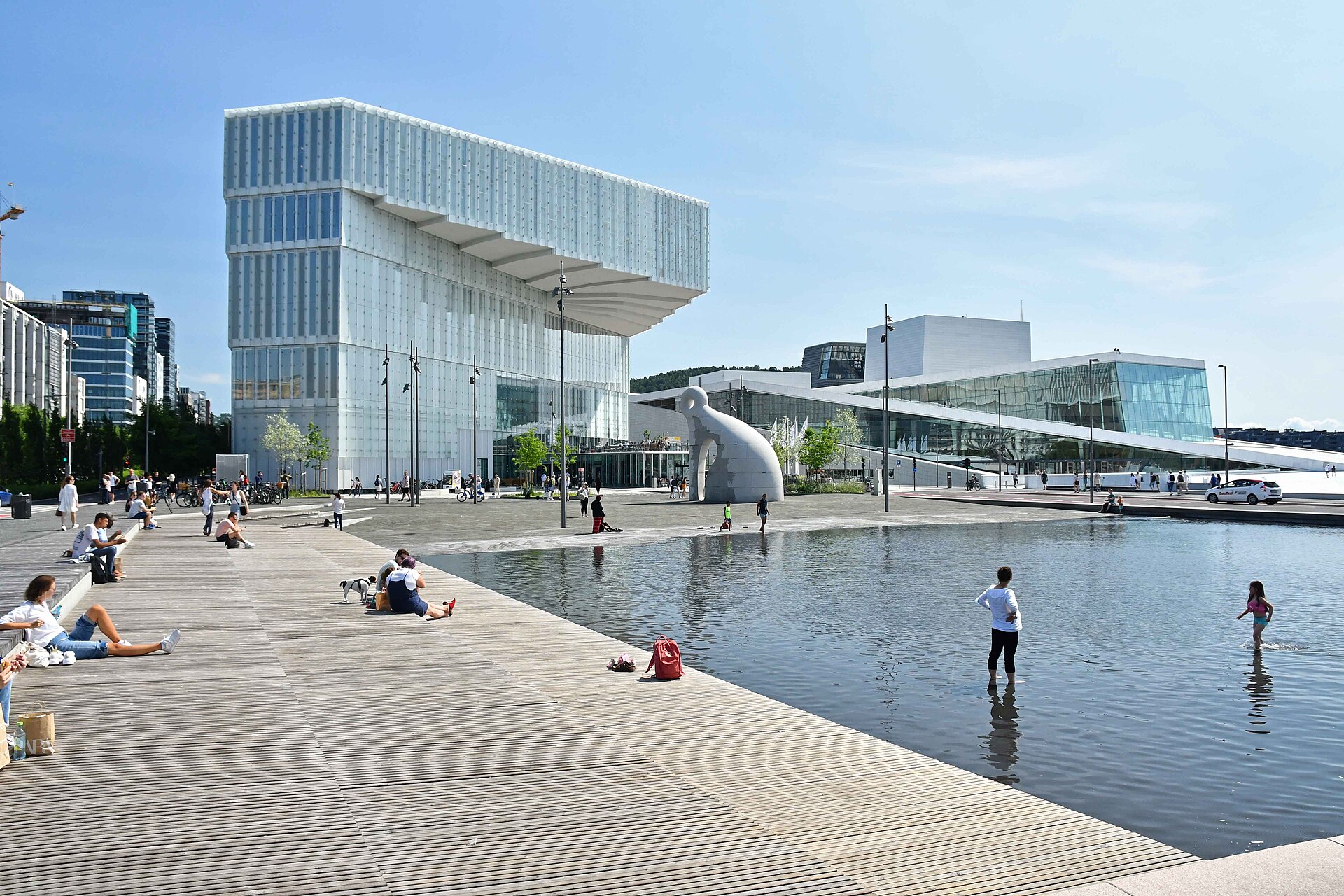
From motorway to fjord: how Oslo rebuilt its waterfront in 25 years
In 2000 Oslo decided to give its harbour back to people. The Opera, Deichman, MUNCH and the Barcode followed. An architect's guide to the Fjord City, and what is still being built.
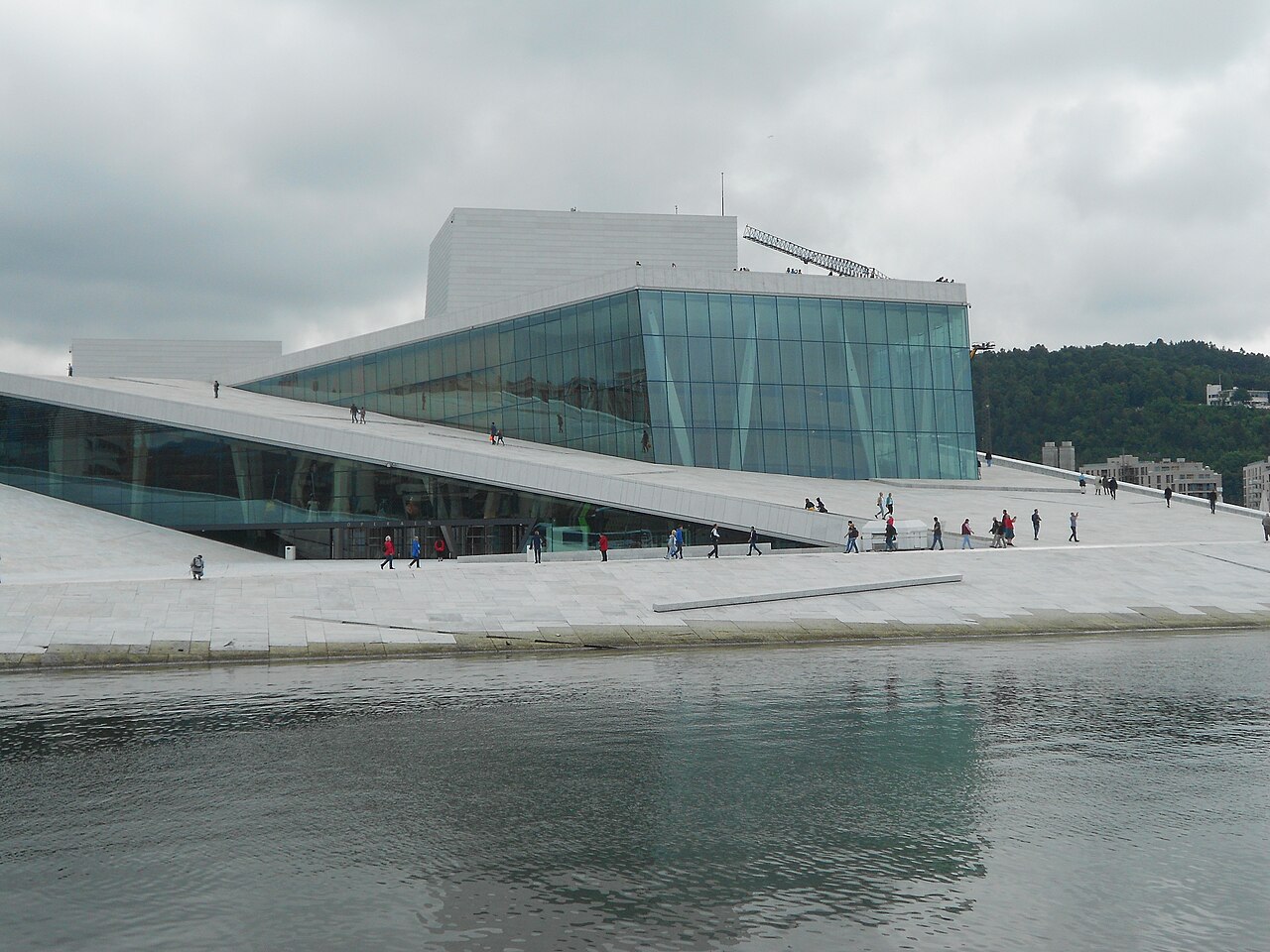
Can you walk on the Oslo Opera House roof? Yes, and here's how to do it well
The Oslo Opera House roof is free and open all day and night. An architect's guide to when to go, what you're looking at from the top, and what most visitors miss.